





Energy Technology Solutions
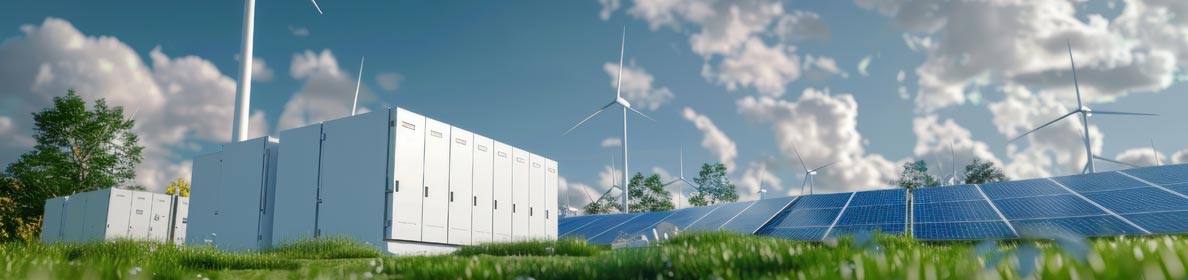
Battery energy storage systems (BESS) store electricity and deliver it when generation and demand do not align. These stationary energy storage systems integrate rechargeable battery cells and modules with power conversion, controls, thermal management, and protective enclosures. BESS supports renewable energy integration, grid balancing, peak-demand management, backup power, microgrids, and resilient EV charging infrastructure. As electrification increases power demand across transportation, buildings, connected devices, and data-intensive infrastructure, reliable energy storage becomes increasingly important. Boyd combines engineered materials, thermal management, and precision manufacturing to help protect critical BESS interfaces from heat, electrical faults, environmental exposure, vibration, and mechanical stress—supporting safer, more reliable energy technology solutions.
Streamlined, Multi-Functional Solutions

Quick Design Cycles and Fast Prototyping

Greater Design Flexibility
What Are Energy Technologies and Why Do They Matter?
Battery energy storage systems (BESS) are central to modern energy infrastructure, storing electricity for use when generation and demand do not align. They support renewable energy integration, peak demand management, backup power, microgrids, and grid resilience. These systems depend on reliable protection for cells, modules, racks, power electronics, and enclosures. Boyd combines engineered materials and advanced manufacturing to address critical BESS interfaces while supporting the wider energy ecosystem. Related solutions help protect renewable energy equipment, power generation and distribution systems, microgrids, and EV charging infrastructure from heat, electrical faults, environmental exposure, vibration, and mechanical stress.Energy Technology Applications
Boyd supports energy generation, conversion, distribution, storage, and charging applications with engineered materials. Key applications include battery energy storage systems, renewable power equipment, microgrids, power electronics, grid infrastructure, and EV charging systems. BESS remains a primary focus because it connects renewable generation, resilient power, and reliable energy delivery.为什么选择博德的电池解决方案?

Our lightweight, high performance sealing solutions help you design larger batteries with greater power density.

我们对电池进行加固改造,以承受恶劣的环境和道路条件,用于储能和电动汽车电池,并延长使用寿命和续航里程。

我们为简化客户装配、制造设计 (DFM) 吞吐量和材料优化设计解决方案。
电动汽车电池组的Boyd差异
我们了解安全性和可靠性。我们也是最大限度地提高应用中的功率密度、能量利用率、回收率和效率的专家。60 多年来,我们已证明可靠性和安全性是我们为运输、航空航天和国防市场提供设计和制造支持的重中之重,推动创新,使我们的技术更轻、更紧凑。我们将这一传统与我们在先进行业经验的创新制造工艺、材料和技术相结合,以安全高效地增强电动汽车电池组组件设计和技术。热失控的三大原因以及如何预防它们
查看文字记录
利用博伊德封装技术最大化BESS性能
(查看文字实录)
Boyd的电池遗产
- Proven experience producing high-volume battery sealing and protection components
- 2 million + eMobility battery component installations
- 超过60年的现场验证性能和超过1亿台设备在运输,航空航天和国防应用中的出货量,在安全性是关键问题的市场中具有值得信赖的可靠性。
Ruggedize BESS Enclosures for Demanding Environments
Battery energy storage systems may operate outdoors, in industrial facilities, at renewable generation sites, or in remote locations. Enclosures must withstand rain, dust, humidity, temperature cycling, UV exposure, vibration, and repeated service access. Custom perimeter seals and gaskets, or enclosure seals or housing gaskets, protect cabinet doors, lids, access panels, and service interfaces against environmental ingress while supporting compression-set requirements, enclosure tolerances, and maintainability.


Manage Cell Swelling and Stack Pressure with Compression Pads
Prismatic cells expand and contract through charge cycling and aging. Without controlled compression, dimensional change can create uneven stack pressure, mechanical stress, and movement within the module. Boyd compression pads fit between prismatic cells to accommodate swelling, manage tolerance variation, maintain targeted stack pressure, and cushion vibration. Pads can be engineered for thickness, force-deflection behavior, compression set, and integration with adjacent dielectric or thermal-barrier layers.

Electrical Isolation Across the BESS Assembly
Dielectric films and barriers electrically isolate cell faces, module covers, busbars, and enclosure clearances without consuming unnecessary space. Custom electrical insulators protect terminals, support busbars, and isolate fasteners to maintain critical clearances and reduce the risk of shorts or arcing. Converted components can combine films, adhesives, and cushioning layers for reliable placement and simplified assembly.Control Heat, Ejecta, and Propagation with Integrated Barriers
A layered protection strategy helps manage the consequences of a cell failure. Thermal barriers between cells or modules slow heat transfer and propagation. Blast barriers positioned above cell vents help retain fragments and redirect hot ejecta toward intended vent paths. Insulation blankets under lids and near vent-facing zones provide transient heat shielding for enclosure surfaces, electronics, and adjacent modules. Material selection and placement should align with cell format, vent direction, electrical clearances, enclosure architecture, and qualification requirements.
SOLIMIDE®电池绝缘和保护
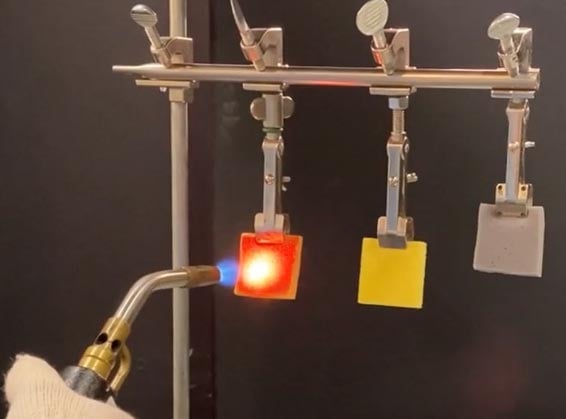
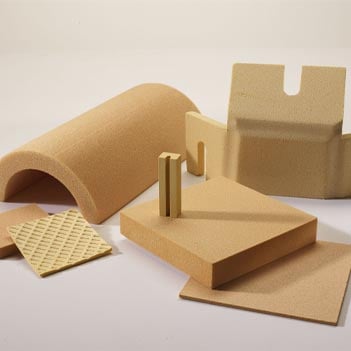
SOLIMIDE® 是一种耐火、超轻、无毒的泡沫,在极端高温和低温下都能保持最佳性能。它具有出色的阻燃性,在许多关键应用中用作阻燃剂。SOLIMIDE®在连续长期直接暴露于火焰下不会点燃或燃烧,零毒素和很少的烟雾。它具有传统的泡沫性能特征,如可压缩性和减振性。它还具有高水解稳定性的无芯吸性,这意味着它不会保留水或水重量,并且可以承受长时间暴露在液体中。当应用于电池组时,它在电池组级别充当二级防火保护,隔离火焰和火灾,同时吸收机械振动和声学,以获得更安全、更安静、更可靠的电池。
防止锂离子电池热失控
Good temperature management of lithium-ion battery cells with additional back up safety features help to prevent battery thermal runaway events or respond safely and swiftly if they occur. Thermal runaway prevention starts with optimized design but also requires components that protect against thermal runaway propagation. Multi-functional, complex battery component solutions designed for cell-to-cell application absorb impact, vibration and movement, dissipate cell heat, and act a flame or heat barrier and isolator if a catastrophic event were to occur. Enable your designs to proactively and safely prevent thermal runaway events by managing vibration, movement and friction, and quickly isolate extreme heat or fire in the unlikely event battery safety design features fail to prevent cell-to-cell propagation. Highly integrated thermal runaway prevention assemblies feature heat spreaders with compression pads and flame-rated electrical insulation to isolate li-ion battery cells. Prevent, protect, and isolate battery storage thermal runaway and EV battery thermal runaway.

加固电池以承受环境暴露
(查看文字实录)
How to Protect EV Batteries Against Collision and Thermal Runaway
(查看文字实录)
全球网络和本地支持
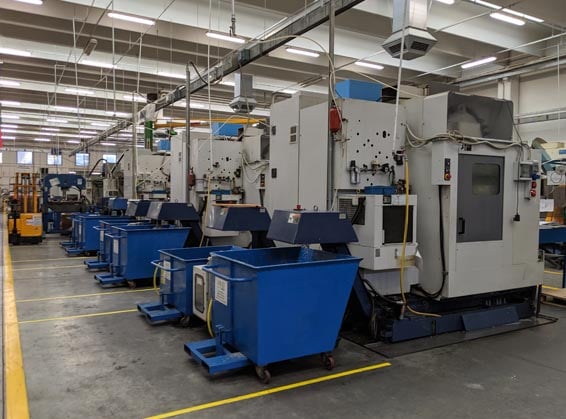
Boyd maintains nearly 20 ISO 9001 and nine multiple IATF 16949 certified manufacturing operations across three continents to assure our energy storage and eMobility components exceed the rigorous demands for quality management systems with adept regional support. Boyd’s customer focus and relationship management culture are aligned with the most demanding QMS system processes. By optimizing processes, organization, and efficiency, we reduce costs and increase yield rates with effective management and assembly processes, all while providing our customers with the highest quality products.解决未来的可持续发展法规
Boyd在全球可用的区域ISO 14001认证制造业务以及与eMobility,电动汽车,混合动力电动汽车,自主性和储能创新者的长期合作伙伴关系,影响着我们如何超越严格的安全和区域环境要求,预测不断变化的消费者需求,并解决未来的可持续发展法规。

电动汽车电池和储能的优势:
收集能量,为电动汽车快速充电。
在较低的需求时间购买能源,以获得更好的价格。
存储能量以供紧急消耗,特别是对于医院和数据中心等关键位置和系统。
提高风电场或太阳能发电场等可持续能源发电的可靠性。
平衡电网生产和需求,特别是在高峰运行期间。
电动汽车电池和储能挑战:
配套设备和保护材料减少了电芯的可用体积,降低了能量密度。
Renewable on-site energy storage systems are located at solar or wind farms, which can be in remote locations. This can limit system maintenance and requires highly reliable systems for ongoing usage.
电动汽车电池必须满足乘客安全的严格安全标准,其中包括碰撞保护和防火材料,以增加紧急情况下的出口时间。
Every gram counts in extending EV battery range, so protection must use lightweight, yet reliable solutions.
利用 Boyd 15 多年的电池专业知识来增强您的产品。
要了解的关键电池和能量术语

| 术语 | 定义 |
|---|---|
| 密封件和垫圈 | 密封电池组、电池模块和电池盖,防止温度冲击、空气、灰尘和水进入。优化性能、防水和密封,同时考虑压缩永久变形和力挠度、NVH 和其他机械因素。 |
| 透气膜和密封件 | 控制内部电池组件或电池组压力、湿度和其他环境因素。 |
| EMI屏蔽 | 通过阻挡不需要的外部电磁波,降低电池组和模块中的电子故障敏感性。 |
| 多层热失控保护 | 高温、防火泡沫和薄膜,用于屏蔽、阻挡和抑制电池单元和模块之间的火焰。 |
| 压缩和公差垫 | 管理电池单元公差堆栈和温度循环的膨胀和收缩。 |
| 电气绝缘和电池包装 | 绝缘层包裹电池单元和模块,以防止内部关键组件之间的火花电压可能导致设备短路或火灾。 |
| 母线用介电粘合剂 | 保护电池组件中的柔性印刷电路,以延长器件寿命。 |
| 热界面材料 (TIM) | 促进冷却板和电池模块之间的热传递,将热量从敏感组件中移走。TIM 有助于最大限度地减少流入、流经和流出界面的热流阻力。 |
| 细胞间键合 | 压敏胶将袋子和棱柱形电池粘合在一起,以增强电池组组件的结构完整性。 |
Energy Technology and BESS FAQs
What is a battery energy storage system (BESS)?
A battery energy storage system (BESS) stores electrical energy in rechargeable batteries and delivers it when needed. A typical BESS integrates battery cells and modules with power conversion, thermal management, controls, and protective enclosures to support renewable energy integration, peak-demand management, backup power, microgrids, and grid resilience.Are there eco-friendly battery cooling solutions?
Yes. More sustainable battery cooling solutions can improve energy efficiency, optimize material use, and support longer system life. Thermal interface materials transfer heat from battery cells or modules to cooling plates, while lightweight insulation and integrated components can reduce part count and material waste. The right approach depends on the battery architecture, operating environment, cooling requirements, and performance targets.What role does cooling play in battery safety?
Cooling helps maintain battery cells and modules within their specified temperature range, reducing overheating and temperature gradients that can degrade performance and increase thermal-runaway risk. Effective thermal management supports safer, more reliable operation across changing loads and environmental conditions, but it is one part of a broader battery safety strategy.What protection materials are commonly used in a BESS?
Common BESS protection materials include environmental seals that limit dust and moisture ingress; dielectric films and electrical insulators that maintain electrical isolation; compression pads that manage cell swelling and stack pressure; thermal interface materials that transfer heat to cooling systems; and thermal barriers, blast barriers, and insulation blankets that help manage heat, fragments, hot ejecta, and propagation during a thermal event.How do environmental seals protect a BESS enclosure?
Environmental seals protect a BESS enclosure by limiting the ingress of dust, moisture, and contaminants that can compromise reliability. Custom foam or rubber gaskets seal cabinet doors, lids, access panels, and service interfaces while accommodating enclosure tolerances, compression requirements, and repeated opening during maintenance.What is the difference between a thermal barrier and a blast barrier?
A thermal barrier is positioned between cells or modules to slow heat transfer and help limit thermal runaway propagation. A blast barrier is typically positioned near or above cell vents to help retain fragments and redirect hot ejecta along engineered vent paths, away from adjacent cells and sensitive equipment.What do thermal interface materials do in a BESS?
Thermal interface materials (TIMs) fill air gaps between a battery cell or module base and a cooling plate. By conforming to surface irregularities and reducing thermal contact resistance, they improve heat transfer into the cooling system and support more consistent battery temperatures.How do dielectric films and electrical insulators improve BESS safety?
Dielectric films and custom electrical insulators create electrical separation around cell faces, module covers, terminals, busbars, fasteners, and enclosure clearances. They help maintain required clearances and reduce the risk of short circuits or arcing while using minimal space within the BESS assembly.How do engineered materials help protect a BESS from thermal runaway?
Engineered materials help protect a BESS from thermal runaway through prevention, containment, and propagation control. Dielectric films and electrical insulators help prevent electrical faults. Compression pads manage cell movement and stack pressure. Thermal barriers slow heat transfer between cells or modules, blast barriers help contain fragments and redirect hot ejecta, and insulation blankets shield nearby enclosure surfaces and components.What factors should be considered when selecting BESS protection materials?
BESS protection material selection should account for the battery design, operating environment, integration needs, and validation requirements. Key factors include cell format, vent direction, electrical clearances, enclosure architecture, environmental exposure, operating temperature, dimensional tolerances, service access, attachment methods, and qualification requirements.Can multiple BESS protection functions be combined into one component?
Yes. Depending on performance requirements and component architecture, a converted multilayer component can combine sealing, electrical isolation, cushioning, insulation, and thermal-management functions. Boyd integrates films, foams, adhesives, elastomers, and insulation to reduce part count, support consistent placement, and simplify BESS assembly.Why are compression pads used between prismatic battery cells?
Compression pads are placed between prismatic battery cells to accommodate cell swelling, maintain targeted stack pressure, absorb dimensional tolerance variation, and reduce mechanical stress throughout charge cycling and aging. These functions help support stable cell positioning and reliable module performance over time.Build Safer, More Reliable Energy Systems with Boyd
Build safer, more reliable energy systems with proven expertise: more than 1 million EV battery seals installed in today’s leading electric vehicles and more than 2 million eMobility battery component installations. Benefit from more than 60 years of field-proven performance and over 1 billion units shipped across transportation, aerospace, and defense applications—experience that supports trusted reliability where safety is critical. Partner with Boyd to simplify assembly, protect critical interfaces, and accelerate the development of dependable energy technologies from component to system.



有疑问?我们随时可以提供帮助!